Vande Bharat Express: What Should You Check Before Choosing It?
The Vande Bharat name is only the starting point. The useful decision comes from checking the exact route, date, timing, class availability and fare.
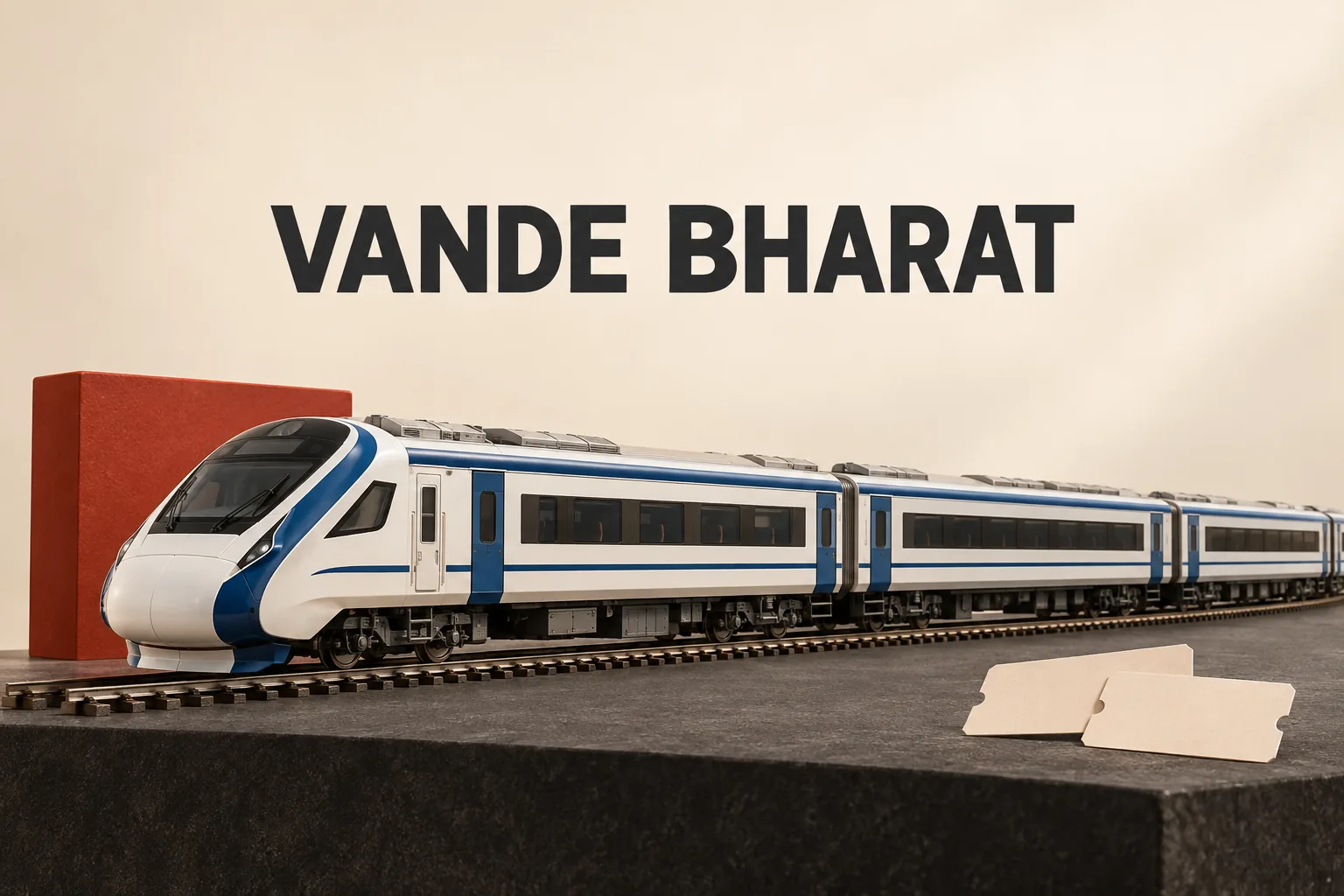
Vande Bharat Express: What Should You Check Before Choosing It?
Vande Bharat is easy to treat as a verdict: modern train, therefore the obvious choice. The official record points to a more useful way to read it. A PIB release’s snapshot as of 12 March 2026 counted 162 Vande Bharat Chair Car services. That is a network of different journeys, not one standard itinerary. Read the PIB release
So the better question is not “Is Vande Bharat worth it?” It is: what does this particular service offer on the exact date and station pair you need?
What the speed figure actually tells you
The same PIB release gives Vande Bharat a design speed of 180 km/h and an operating speed of up to 160 km/h. These figures describe the train’s stated capability; they are not an arrival-time promise for every corridor.
That distinction changes how the number should be used. Treat it as information about the train’s operating capability, not as a shortcut for calculating your journey. If timing is your priority, the departure and arrival shown for the selected train matter more than the headline speed.
Why the feature list matters—but only in its lane
The official feature list includes KAVACH, automatic plug doors, CCTV, emergency alarm push buttons, passenger–crew talk-back, fire detection and suppression, sealed gangways, Divyangjan-friendly lavatories, reclining seats, charging sockets, mini pantry equipment and GPS-based passenger information systems. See the full official feature list
These features are easier to understand when separated into three groups:
- Safety and response: KAVACH, CCTV, alarms, talk-back and fire-safety systems.
- Access and movement: automatic doors, sealed gangways and accessible lavatories.
- Day-journey convenience: reclining seats, charging points, pantry equipment and passenger information.
This separation prevents a common mistake. A comfort feature does not establish the fare, and a safety feature does not establish how quickly a particular journey will reach its destination. The official list supports the onboard feature claims; it does not answer every purchasing question.
The useful comparison starts with four fields
IRCTC’s official Book E-Ticket page asks passengers to enter the From station, To station and journey date, select E-Ticket and submit the search. The results show available trains, train details and timings, class availability, the fare for an adult passenger and applicable IRCTC service charges. Check the IRCTC booking guidance
Before comparing Vande Bharat with another option, read the result in this order:
- Station pair and date: this establishes which service you are actually considering.
- Departure and arrival: this answers the time question more reliably than the 160 km/h figure.
- Class and availability: this connects the train’s comfort promise with what is offered on your selected journey.
- Fare and charges: this keeps the cost comparison tied to the actual result rather than a generic Vande Bharat price.
This is more than booking hygiene. The train name gives you a family-level expectation; the date-specific search gives you journey-level evidence.
The bottom line is not “Vande Bharat is always better”
Vande Bharat may fit your plans when the exact service matches your priorities: the itinerary’s timing, the available class and the displayed fare. Its official features explain what the train is designed to provide onboard.
But the label alone cannot settle the choice. Treat 180/160 km/h as a capability statement, treat the PIB feature list as a defined set of onboard attributes, and use IRCTC’s result for your date and stations to decide whether that particular journey works for you.