What Is Indian Standard Time, and How Can You Check It?
Indian Standard Time is more than the number on a phone screen. Here is how IST, the NPL reference clock, and device time relate to one another.
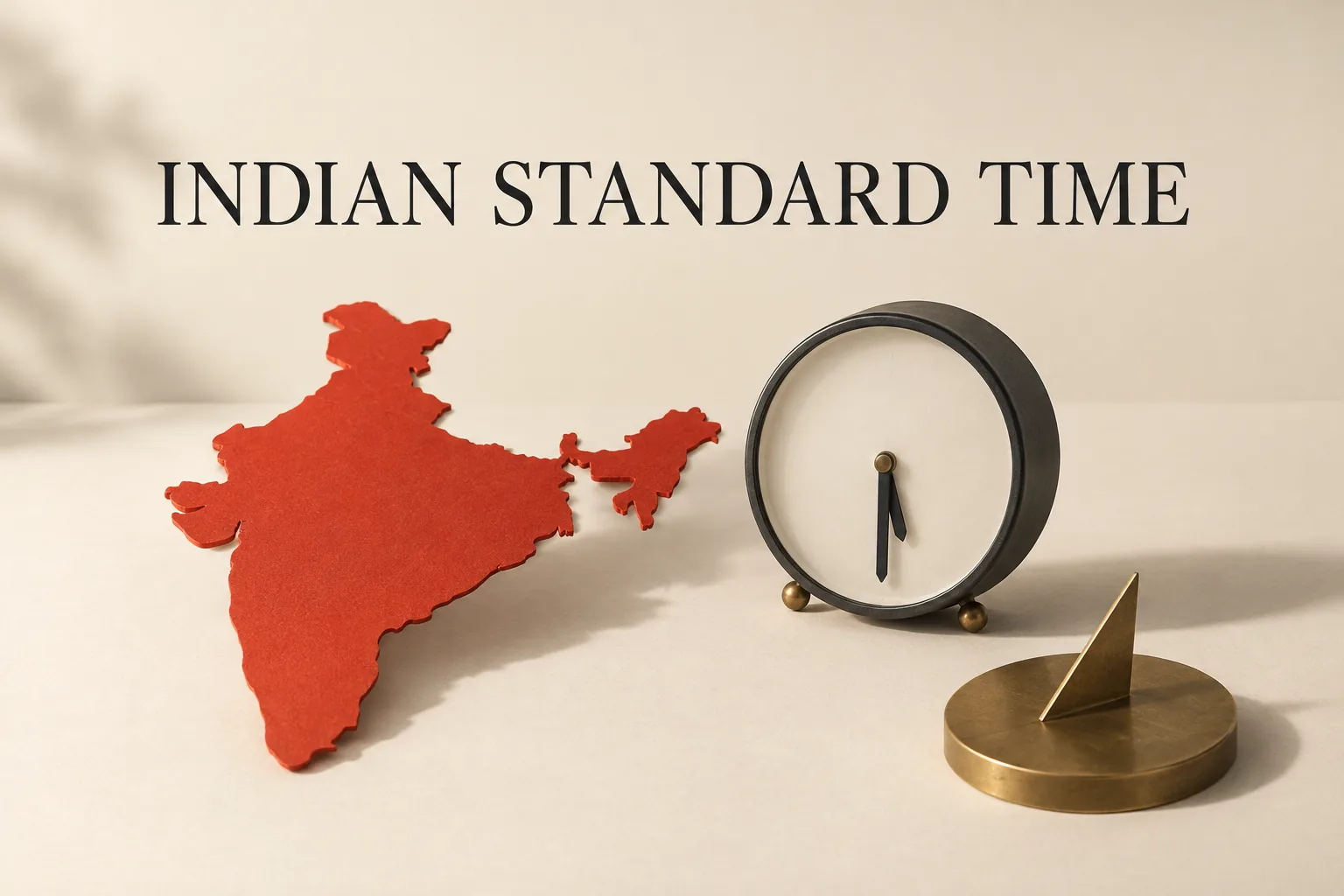
Time on a screen looks like a single fact. In practice, there is a difference between India’s time standard, the reference used by the national time service, and the clock shown by your own device.
What does Indian Standard Time actually mean?
The CSIR–National Physical Laboratory (CSIR-NPL) identifies Indian Standard Time (IST) as UTC+05:30. Its Indian Standard Time Metrology page describes CSIR-NPL’s role in maintaining and disseminating IST.
The NPL-India Web Time Display also identifies the reference it maintains as UTC(NPLI). The useful distinction is this: IST is the Indian time label people need for everyday time, while UTC(NPLI) is the NPL reference shown alongside it.
Which clock should you compare with when screens disagree?
The NPL web display is useful because it places several readings together: IST, UTC(NPLI), your time zone, your device clock, and the difference between the device and NPL time.
That changes the question from “Which screen looks right?” to “What is this screen being compared with?” A phone or laptop clock may be familiar, but familiarity does not make it the reference. The NPL display lets you see whether the device reading differs from the Indian reference. It shows the difference; it does not, by itself, explain why that difference exists.
This is a more careful way to check time. A device reading is something to compare, not something to use for redefining IST.
Is checking the time the same as synchronising a device?
No. Reading a reference clock and configuring a computer to synchronise are separate tasks.
For a straightforward time check, the NPL web display provides the comparison. For technical synchronisation, NPL’s sync instructions identify time.nplindia.org as the server to use. The server name is therefore a configuration detail, while the web display is the visible check against the reference.
The practical rule is simple: use IST = UTC+05:30 when you need India’s standard time, use the NPL web display when you need to compare a device, and use NPL’s synchronisation guidance when the device itself needs a technical time reference. The important question is not which number looks familiar, but which reference produced it.
Material checked
More to read
- Is the Google Play Store a Safety Check? What Indian Users Should Actually Look At
- What Instagram’s 13+ Teen Account Setting Changes in India
- Can You Download a Song for Offline Listening in India?
- Google Search in India Is Becoming a Conversation—What Actually Changes?
- How to Find a New Song in India Without Confusing a Trend with a Recommendation